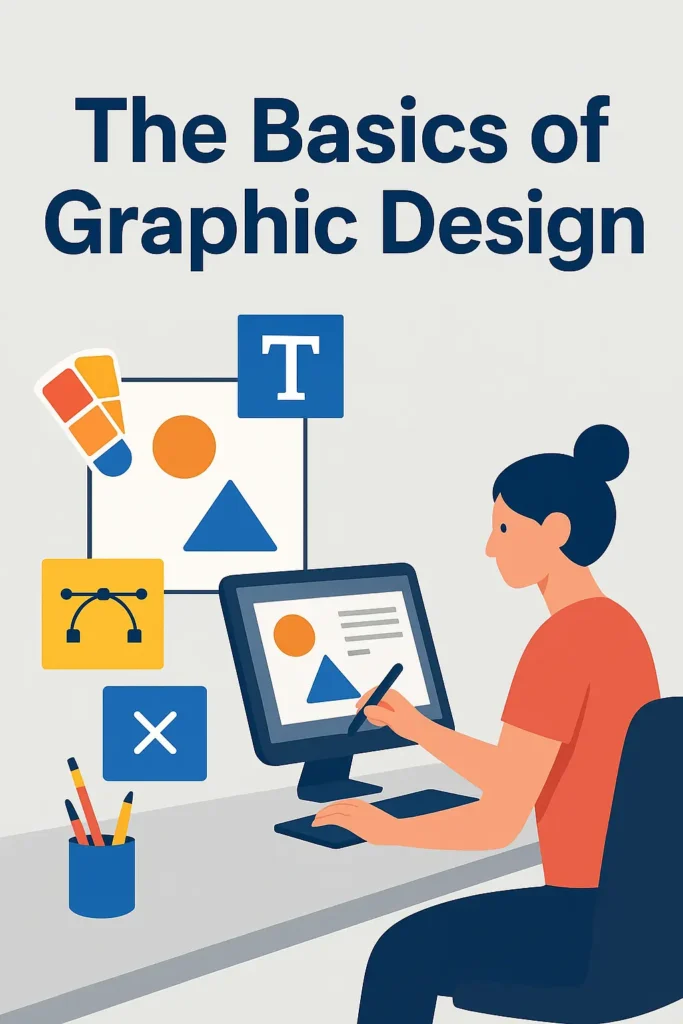
Introduction: Understanding the Power of Graphic Design
Graphic design is the art and practice of creating visual content to communicate messages. It combines creativity, technology, and communication to produce visuals that inspire, inform, and engage audiences. Whether in advertising, branding, or digital media, graphic design plays a vital role in shaping how we perceive the world around us.
For students, businesses, and aspiring designers, understanding the basics of graphic design is the foundation for creating impactful and professional work.
What Is Graphic Design?
At its core, graphic design is the process of combining text, images, color, and form to deliver a visual message. It’s both an artistic expression and a functional communication tool. Designers aim to make complex ideas clear and appealing through visuals.
Graphic design appears everywhere—on billboards, websites, packaging, and even mobile apps. In today’s digital era, it is one of the most sought-after creative skills across industries like marketing, media, and education.
A Brief History of Graphic Design
The history of graphic design spans centuries of human communication. From cave paintings and Egyptian hieroglyphs to medieval manuscripts, visual storytelling has always been central to civilization.
The invention of the printing press in the 15th century marked a turning point by allowing mass production of visual materials. Later, the 20th century introduced iconic design movements like Bauhaus and Modernism, which emphasized simplicity, structure, and function.
Today, with the rise of digital technology, graphic design has evolved into a diverse field, including web design, user interface (UI) design, motion graphics, and 3D design.
Core Elements of Graphic Design
Every great design starts with mastering its core elements—the visual ingredients that make up any composition.
1. Line
Lines guide the viewer’s eye, create structure, and define shapes. They can be straight, curved, or decorative depending on the tone of the design.
2. Shape
Shapes form the foundation of all visual content. Geometric shapes (circles, squares) convey order, while organic shapes feel natural and free.
3. Color
Color sets the mood and emotional tone. Understanding color theory helps designers use hues effectively to create contrast and harmony.
4. Texture
Texture gives depth and tactility. Even in digital design, texture can create a sense of realism and interest.
5. Space
Often called “white space,” this refers to the empty areas around elements. Proper use of space makes a design more readable and balanced.
6. Typography
Typography is the art of arranging fonts. Font style, size, and spacing affect readability and emotional impact.
7. Image
Images—photos, illustrations, or icons—instantly communicate ideas and emotions, strengthening a design’s visual message.
Principles of Graphic Design
While elements are the building blocks, design principles determine how they work together effectively.
1. Balance
A well-balanced design feels stable and pleasing. Symmetrical balance creates order, while asymmetrical balance adds energy and interest.
2. Contrast
Contrast highlights differences in color, size, or shape to draw attention to key elements.
3. Alignment
Alignment organizes a layout, ensuring that visuals and text appear cohesive and professional.
4. Proximity
Grouping related elements helps the viewer understand relationships between information.
5. Repetition
Repetition reinforces visual consistency. It’s essential in branding and identity design.
6. Hierarchy
Hierarchy shows which information is most important. Designers use size, color, and placement to guide the viewer’s focus.
7. Unity
Unity ensures that all parts of the design work harmoniously to express a single, clear message.
Essential Tools for Graphic Designers
Modern graphic designers use a combination of digital tools and creative thinking to bring ideas to life.
-
Adobe Photoshop: Ideal for photo editing, digital art, and web graphics.
-
Adobe Illustrator: Used for creating scalable vector designs, such as logos and icons.
-
Adobe InDesign: Perfect for layouts in magazines, books, and brochures.
-
Canva: A beginner-friendly design platform with ready-to-use templates.
-
Figma & Sketch: Tools focused on web design, user interface (UI), and user experience (UX).
Although tools are helpful, strong design principles and creativity are what truly define a successful designer.
Applications of Graphic Design in the Modern World
Graphic design is not limited to art—it’s an essential business and communication skill.
-
Advertising and Marketing: Eye-catching posters, banners, and social media ads help brands attract customers.
-
Branding and Identity: Logos, business cards, and brand visuals establish a company’s identity.
-
Web Design: Designers craft visually appealing and user-friendly websites.
-
Packaging Design: Attractive packaging helps products stand out in a competitive market.
-
Motion Graphics: Animated visuals enhance videos, presentations, and digital ads.
Whether you work in print, digital, or multimedia, design influences how people perceive information and make decisions.
The Importance of Visual Communication
In an age of short attention spans, visual communication is the most powerful way to share ideas. Studies show that people remember visuals better than text. A well-designed graphic can explain complex concepts faster than paragraphs of text.
For businesses, visual design builds trust and recognition. For individuals, it’s a creative medium of expression. Graphic design bridges the gap between imagination and communication.
Career Opportunities in Graphic Design
As industries expand digitally, the demand for graphic designers continues to grow. Common roles include:
-
Graphic Designer – Creates visuals for print and digital media.
-
Web Designer – Focuses on layout and user experience for websites.
-
UI/UX Designer – Designs interactive interfaces for apps and digital platforms.
-
Brand Identity Designer – Develops consistent visual identities for businesses.
-
Motion Graphics Designer – Produces animated videos and digital effects.
-
Art Director – Leads creative teams and manages design projects.
Freelancing, remote work, and digital entrepreneurship also offer flexibility and independence for modern designers.
Tips for Aspiring Designers
-
Learn the fundamentals. Understand design principles before exploring complex tools.
-
Practice regularly. Design daily, even small projects, to improve your skills.
-
Study others’ work. Observe professional designs for inspiration and analysis.
-
Seek feedback. Constructive criticism helps refine your creative eye.
-
Build a portfolio. Showcase your best work to attract opportunities.
Remember, creativity grows through curiosity, patience, and constant learning.
Conclusion
Graphic design is more than just decoration—it’s the visual language of modern communication. From business branding to social media campaigns, effective design combines aesthetics with purpose.
By mastering the elements and principles of design, learning digital tools, and developing your creativity, you can transform ideas into visuals that inspire and inform. For students, entrepreneurs, and creatives alike, graphic design opens endless opportunities to shape the way the world sees and feels.